|
|
coralreeffish.com
presents my research on coral reef fishes. Since my first
introduction to coral reefs, in the San Blas Islands of Panama
when I first started graduate school in 1980, I have been
particularly interested in the early stages of reef fishes:
the pelagic larvae that disperse offshore and the new juveniles
starting life on the reef. Little is known about them and
much remains to be discovered about all aspects of their lives.
More recently, I have become interested in the application
of DNA sequencing to fish identification and taxonomy and
discovered several new reef-fish species.
The
web is a particularly useful instrument for promoting science.
In addition to the large databases, such as FishBase,
individual scientists can present their findings, and opinions,
and become part of a virtual network of data, hypotheses and
discussion. This more eclectic approach to disseminating scientific
knowledge can be a very useful meta-level analytical tool.
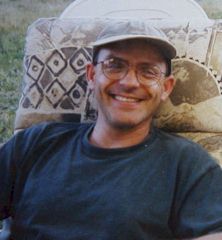
Benjamin
Victor, e-mail: ben at-sign, then coralreeffish.com
|
|
My new reef fish
species:
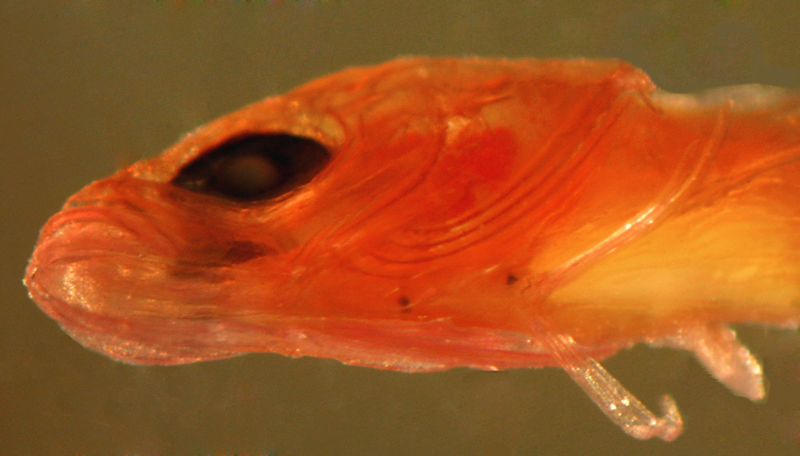
Coryphopterus
bol (Caribbean)→
Coryphopterus
kuna (Caribbean)↓
Xyrichtys victori (Galapagos)
|
 |
|
 |
 |
|
|
|
|
|
| |
|
|
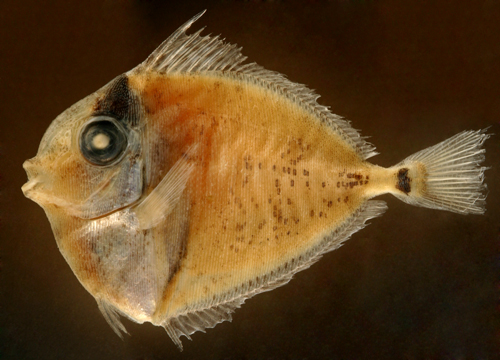
A
Photographic Guide to the Larval Reef Fishes of the
Caribbean
with
a complete species list of reef-associated fishes for
the tropical western Atlantic
|
| click
arrow to go to the guide |
 |
|
|
|
|
 |
|
|
|
|
|
Identification
of fish larvae using barcode DNA sequences
Article
from The Economist on barcoding reef fishes
|
|
|
 |
|
click arrow for full article
|
|
|
|
 |
|
|
| The Ocean Science Foundation |
|
| |
|
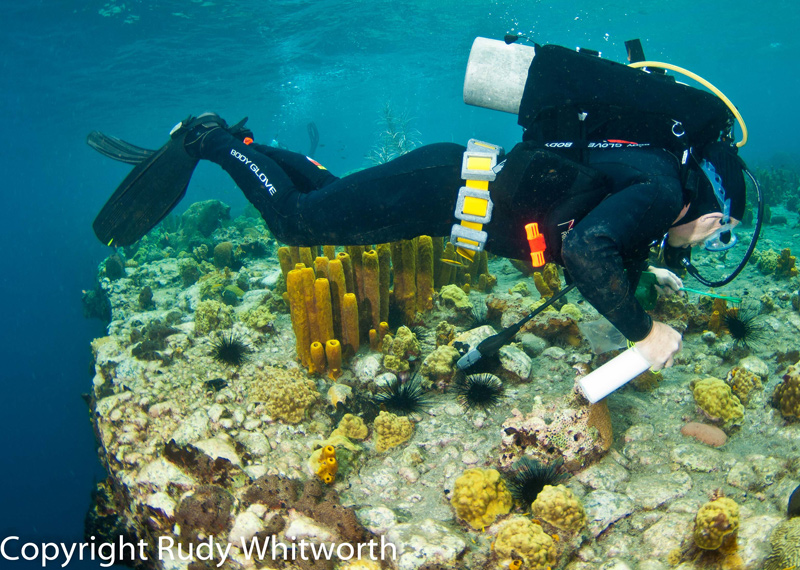
UPDATE 2010: We have formed a non-profit
organization, the Ocean
Science Foundation, to provide a research vessel for reef biologists,
especially in collaborative studies with marine biologists from developing
nations. We have acquired a 53-foot motor catamaran, the Darwin, which
is still in the process of getting ready for projects in the
Sea of Cortez...
Information
on trips and progress of the Darwin will be on the soon-to-be-upOSF
website....
|
|
|
|
on
another vein entirely:
User-Friendly
Guide to Spoken Balinese
the
colloquial language of the island of Bali in Indonesia
(
formulated during the 9th International Coral Reef Symposium in
Bali, Oct. 2000, with some help from taxi drivers)
|
|
 |
|
Taxonomy Name, rank and serial
number Biologists want to barcode half a million species in the next
five years
THE tale of the unknown goby began in1982 when Benjamin Victor, of
the Ocean Science Foundation in Irvine, California, discovered an
unusual fish in a reef in Panama. With only a single specimen he was
hard pressed to prove it was a new species, so the fish remained,
unnamed, on his desk for 25 years. Then, last year, he was sent an
unusual fish larva. Using a new kind of DNA identification called
barcoding he showed that it was a younger version of his mystery goby
and that both specimens were, indeed, a new species.
DNA barcoding was invented by Paul Hebert of the University of Guelph,
in Ontario, Canada, in 2003. His idea was to generate a unique identification
tag for each species based on a short stretch of DNA. Separating species
would then be a simple task of sequencing this tiny bit of DNA. Dr
Hebert proposed part of a gene called cytochrome c oxidase I (coi)
as suitable to the task. All animals have it. It seems to vary enough,
but not too much, to act as a reliable marker. And it is easily extracted,
because it is one of a handful of genes found outside the cell nucleus,
in structures called mitochondria. The idea worked, and it has dramatically
reduced the time (to less than an hour) and expense (to less than
$2) of using DNA to identify species. And thus, in July this year,
Dr Victor's mystery goby became Coryphopterus kuna. It was the first
vertebrate to have its DNA barcode-a sequence of about 600 genetic
"letters"-included in its official description. Barcoding
has taken off rapidly since Dr Hebert invented it. When the idea was
proposed, it was expected to be a boon to taxonomists trying to name
the world's millions of species. It has, however, proved to have a
far wider range of uses than the merely academic-most promisingly
in the realm of public health. One health-related project is the Mosquito
Barcoding Initiative being run by Yvonne-Marie Linton of the Natural
History Museum in London. This aims to barcode 80% of the world's
mosquitoes within the next two years, to help control mosquito-borne
diseases. Mosquitoes are responsible for half a billion malarial infections
and 1m deaths every year. They also transmit devastating diseases
such as yellow fever, West Nile fever and dengue. However, efforts
to control them are consistently undermined by the difficulty and
expense of identifying mosquitoes-of which there are at least 3,500
species, many of them hard to tell apart. So far Dr Linton's team
has used the coi gene to distinguish 390 species of mosquito, of which
7% have turned out to be new species. Anopheles oswaldoi., for example,
was known to be a carrier of malaria in northern, but not southern,
Brazil. That was puzzling. DNA barcoding, however, has shown that
A. oswaldoi is actually four species, of which only one carries malaria.
That explains the geographical discrepancy and should also assist
efforts to curb the disease in Brazil by allowing the real culprit
to be studied in detail. Fly titles The mosquito initiative has also
had a piece of luck. Using some chemical wizardry, Dr Linton has been
able to get barcodes from old, dried museum specimens collected as
long ago as 1916. Between the Natural History Museum and the Smithsonian
Institution in Washington, DC, 70% of the world's mosquito species
are pinned and ready to be barcoded. In a bid to track down the remainder
quickly, Dr Linton plans, next month, to join a floating research
institute-the Scholar Ship-that will be docked in Panama. There, she
will offer a drop-in mosquito-identification service. All she asks
in exchange for identifying mosquitoes is a copy of their barcodes.
And Panama is only the first port of call. The ship will go on to
sail around the world, offering a rapid-sequencing service wherever
it docks; in half an hour, Dr Linton's machine can generate almost
100 barcodes. Herbal medicines may also benefit. John Kress and David
Erickson, who both work at the Smithsonian, have barcoded all 689
species listed in World Economic Plants. They intend to screen the
content and quality of natural plant products used as medicines. In
doing so, they have had to identify a new kind of barcode, as the
Col gene is not found in plants. Another group that could benefit
from barcoding are customs officers, says Mark Blaxter, an evolutionary
biologist at the University of Edinburgh. For those struggling to
prevent the importation of pests or endangered wildlife, rapid and
accurate identification tools are essential-particularly when perishable
goods are being held up. America's Department of Agriculture is creating
barcodes for the world's fruit flies. These are important agricultural
pests and often arrive in the country as hard-to-identify larvae,
or eggs, on fruit. Another group at the National Chung Hsing University
in Taiwan (where hundreds of newly minted experts in the field have
just met for the Second International Barcode of Life Conference)
have created a prototype barcoding biochip. This is a collection of
miniature DNA test sites on a sliver of glass that will rapidly discriminate
between four species of fruit flies. Barcoding's ease of use is also
attracting interest from other government agencies. America's Federal
Aviation Administration and its air force are working on bird barcoding.
They want to scrape bits of tissue from planes, discover which birds
are most often being struck, and thus work out which bird-migration
routes to avoid. Another researcher, Mark Siddall, of the American
Museum of Natural History in New York, has used barcoding to show
that purported examples of Hirudo medicinalis (the medicinal leech
approved by America's Food and Drug Administration as a prescription
medical device for stopping blood clots) are sometimes another leech
entirely. Dr Hebert hopes to have half a million barcodes available
online within the next five years. Both his laboratory at Guelph and
the Smithsonian's Laboratories of Analytical Biology can sequence
the CO1 gene rapidly, and have thus been dubbed "barcode factories",
so this looks feasible. In the long term, barcoding enthusiasts envisage
something called a "barcoder". It will be a hand-held device
that reads barcodes on the spot. The days will soon be over when a
strange little fish waits a quarter of a century for a new name.
|
|
|
Information
on trips and progress of the Darwin will be on the soon-to-be-up.
|
|
|